How to Make Your Own Miniature Books?


Contents
Have you ever seen a miniature book and thought, 'How do they make it so small and detailed?' These adorable creations are not only beautiful to look at, but also perfect for use as a personal diary or as a special gift. In this article, you'll discover how to get started making your own hand-bound miniature books. Let's begin!
In short
- Miniature books are easy to make yourself.
- You only need basic supplies.
- Perfect for personal projects or gifts.
What do you need to get started?
To make your own miniature books, you only need a few basic supplies. The most important is paper, which you can choose in various shapes and colors depending on your preference. For example, opt for plain white paper if you want a classic look, or go for recycled paper for an eco-friendly option. Additionally, you will need thread or yarn to bind the pages together. Choose strong thread, such as waxed thread, that doesn't break easily and ensures a sturdy binding.

Special tools such as needles and a bookbinding needle are also handy. A bookbinding needle has a larger eye to make threading the thread easier and is sturdy enough to pierce through multiple layers of paper. Furthermore, a ruler, scissors, and glue are essential. The ruler allows you to measure and cut accurately, while the scissors are handy for cutting paper and thread. Glue, preferably PVA glue, is ideal for attaching the cover and finishing details.
When you start bookbinding, it's helpful to have a workspace that is both clean and organized. This allows you to work efficiently without being distracted by clutter. Make sure your table is large enough to lay out all your materials and tools neatly. This way, you can work quickly and without interruptions.
- Paper of choice
- Thread or yarn
- Bookbinding needle
- Ruler
- Scissors
- Glue
How do you make the cover of your miniature book?
The cover of your miniature book is not only decorative but also protects the pages. You can choose from cardboard, leather, or fabric for the cover, depending on the look you want to achieve. Cardboard gives a sleek and modern look, while leather is a classic and durable option. Fabric can give a playful and colorful appearance.
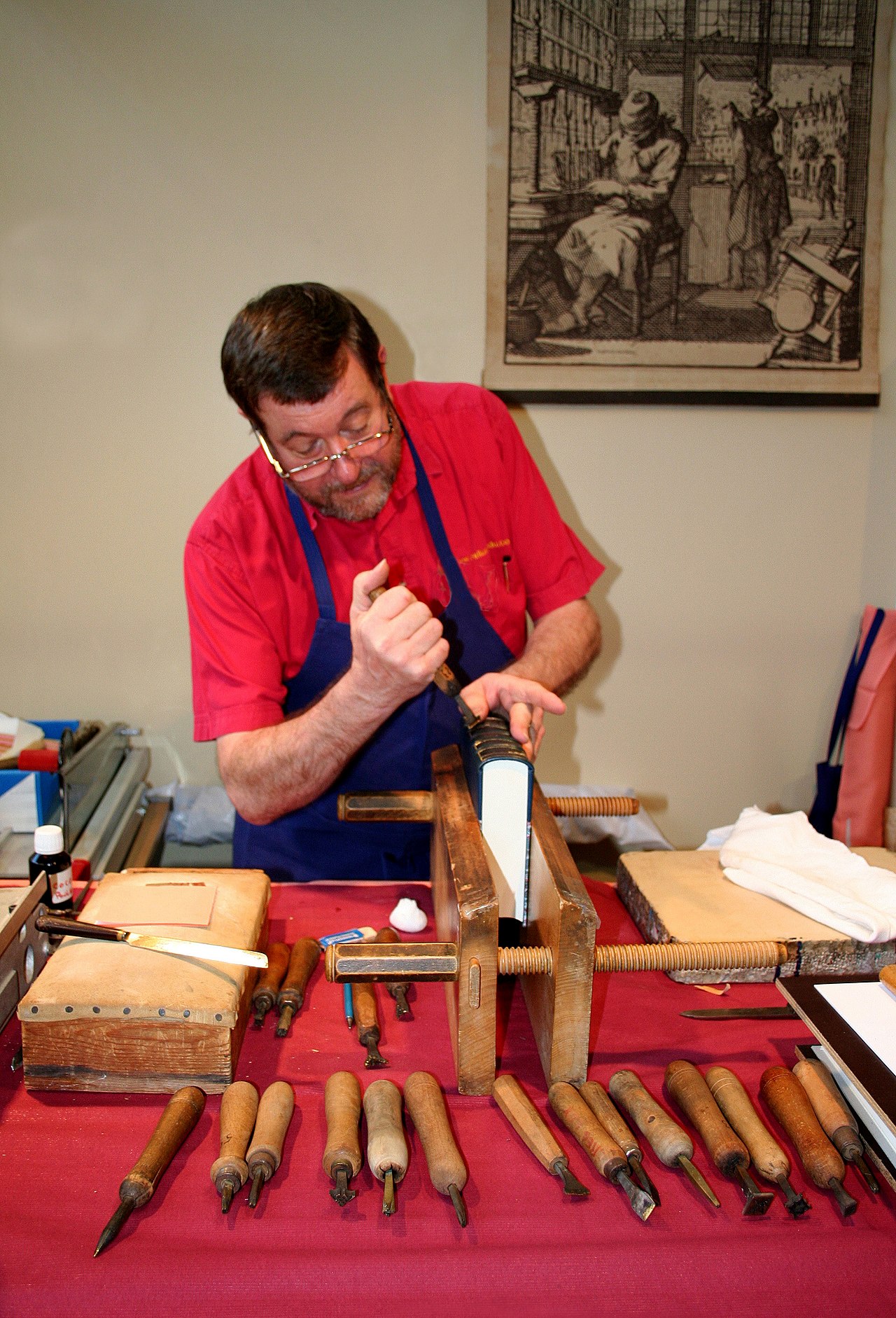
Cut the material to the desired size, usually slightly larger than the inner pages. Make sure to finish the corners neatly to maintain a professional appearance. Use scissors or a sharp knife to make precise cuts. It is important that the cover is slightly larger than the pages to provide adequate protection.
Next, glue the material onto a sturdier base, such as cardboard, for extra support. Allow the cover to dry well before proceeding with binding the pages. Optionally, place the whole thing under a heavy book or a bookbinding press to ensure a smooth finish and prevent air bubbles.
How do you bind the pages together?
Binding the pages is a crucial step in making a miniature book. Start by folding your paper to the desired size, usually in sets of 4 to 6 pages per signature. Make sure the folds are sharp by using a bone folder, which ensures a neat and even finish.

Use a needle and thread to sew the pages together. Ensure that the stitches are even to guarantee a neat finish. Start in the middle and work your way out for the best result. Try not to pull the thread too tight to avoid tearing, but make sure the binding is strong enough to hold the pages together.
After you have sewn all the signatures, you can combine them into a book block. This forms the base of your book, onto which you will later attach the cover. Glue the spine of the book block and let it dry under pressure to create a strong bond. Ensure that the edges of the pages are even for a professional appearance.
- Fold the paper into signatures.
- Sew the signatures together.
- Form a book block with the sewn pages.
How do you add details and decorations?
Now that your miniature book is assembled, it's time to personalize it. Use stamps, paint, or stickers to decorate the cover and pages. This is your chance to be creative and showcase your personal style. Experiment with different colors and patterns to create a unique design.

Consider adding a closure, such as a ribbon, an elastic band, or a button, to keep the book nicely closed. This detail can be both functional and aesthetic. A ribbon gives an elegant look, while an elastic band is practical and easy to use.
Inside, you can also add pockets or envelopes for extra space to store notes or small memories. These can be made from the same paper as the pages or from a contrasting color to stand out. You can also add small illustrations or photos to make the book more personal.
What can you do with your miniature books?
Miniature books are versatile and can be used for various purposes. They are ideal as a personal diary, where you can jot down thoughts, poems, or drawings. Due to their small size, you can easily carry the book with you and use it anywhere.

They also make beautiful gifts. Give a custom-made miniature book to friends or family, filled with personal messages or photos. The handmade aspect adds an extra personal touch to your gift, making it even more special.
Additionally, miniature books can serve as creative decorations in your home. Place them on a bookshelf or a desk for a playful touch. They can also be used as unique place cards at events. Their charm and unique appearance are sure to attract attention.
| Use | Description |
|---|---|
| Diary | A personal book for your thoughts. |
| Gift | A custom-made gift for someone special. |
| Decoration | A charming addition to your interior. |
Frequently Asked Questions
How big should a miniature book be?
Miniature books typically range from 2.5 cm to 7.5 cm in size. It depends on your preference and the purpose of the book. Smaller books are ideal for jewelry or as a charming addition to a collection, while larger books offer more space for writing and decoration.
What glue is best for bookbinding?
PVA glue is often used for bookbinding due to its strong and flexible properties. It dries clear and is easy to work with. For special applications, you can also use bookbinding glue, which provides more grip and durability.
Can I use any type of paper?
Yes, you can use any type of paper, but pay attention to the thickness and quality. Thicker paper provides more sturdiness and is ideal for book pages that need to withstand more, while thinner paper is suitable for writing and drawing. Experiment with different types to see which works best for your project.
Now that you know how to make your own miniature books, it's time to let your creativity run wild. Whether you keep them for yourself or give them away, these little treasures will always bring a smile to your face.
Image created with AI for Yoors.
Follow Eva Smit on Kadoly
Create a free account to follow creators, like and save posts and join the conversation.
Comments